Table of Contents
Pre-ART vs. Post-ART: A Shift in Survival
Collective Trauma and Internalized Stigma
Survivor’s Guilt and Arrested Development
The Existential Weight of a Diagnosis
Queer Activism and the Rise of ACT UP
Honoring Legacy: Community, Resilience, and Queer Joy
Counseling is inseparable from history. This thought circles my mind when clients speak of the HIV/AIDS crisis. These sessions leave me with immeasurable gratitude for this complicated sphere we call “life.” For them, the 1980s and 1990s were a time of perpetual fear, shame, and loss. The shift from living to surviving evoked a never-ending state of uncertainty. Anyone could fall victim to the virus even professionals knew little about. While time passed, fear stayed. Some days it feels as though I am talking to—not a middle-aged person—but their younger self who tested positive for HIV decades ago. Never have I more fully understood the effects of trauma: How it reveals our past and guides our future. This article will discuss the trauma that was living with AIDS amidst the crisis.
Needless to say, being diagnosed with HIV in the 1980s was profoundly different from that of today. The emergence of antiretroviral therapy (ART) has encouraged many to distinguish its past from present as “pre-ART” and “post-ART” eras, respectively. ART and other forms of medication (e.g., PrEP) have shifted AIDS from a fatal disease to a treatable condition. Despite these advancements in medicine, there is an undeniable surge in HIV cases around the world. Last year, New York City alone saw a 5.4% increase in HIV diagnoses from 2024; this follows a 6.9% rise from the year prior. This data is even more alarming for its racial-ethnic disproportionality: Seventy percent of cases account for Black/African American and Hispanic/Latiné/x people; the remaining 30% consists of White Americans. I share these statistics to justify the concerns that people—whether they did or did not live through the crisis—bring to counseling and society. As somebody who was born in the post-ART era, I wonder how my vision of the queer community may catch and miss the enduring effects of the AIDS crisis.
Collective Trauma
Only at the start of graduate school did I truly learn about the epidemic. This humility I embrace in and outside the therapy room. The stories my clients share hold more information than any article I crammed. Our sessions hold space for the prejudice and misinformation they endured for decades. Often this social stigma evolves into internalized stigma. We know loud and clear how adverse experiences shape our identity. Several of my clients expressed feeling “exposed” for their HIV status throughout the epidemic. This sense of exposure was heightened for those who “forced” themselves to come out. Instead of receiving support, they were abandoned by family, friends—even professionals. Their diagnosis was entangled with their reputation: A dilemma when part of a community that is big and small—paired with the ever-growing scrutiny led by political and religious discourse. HIV was yet another reason people rejected the LGBTQIA+ community.
In time, this hyper-visibility evolved into invisibility. While the lives we lost do not go unrecognized, our homage must also be paid to those who survived the epidemic. “We are still here,” several of my clients highlight. This invisibility tends to clash with survivor’s guilt: Remorse for “outliving” their partners, friends, or family members. A preoccupation with physical health led many to disregard their mental and emotional well-being—a state known as “arrested development.” Every day seems to invoke the pain of loss and joy for life. All at once, an epiphany hit me hard and soft while leaving the office one night: Collective trauma is both past and present.
Want more content like this?
Join our mailing list
The Existential Dilemma
Infection was perceived as—and typically was—a “death sentence.” Many people quit their jobs, wrote their wills, and planned their funerals after receiving a diagnosis. Clients have shared with me the farewell letters they wrote to loved ones. Some ate and drank excessively with the lingering thought of, Nothing matters. By the late 1990s, over 700,000 people tested positive in the United States. More than half had died of AIDS. Urgency rose as people asked themselves, “What must I do?” instead of, “What shall I do?” This confrontation with death manifests into anticipatory grief. Many people relied on spirituality, substances, sexual activity, excessive spending, and other strategies to grapple with the belief that life was near end.
Several of my clients, however, refused to believe that death was inevitable. Instead, they decided how to accept their infection, the loss they have and expected to face, and the world that stood against them. Self-declared freedom allowed them to thrive in spite of absurdity. Infection also compelled them to exercise moral agency: “Do I tell others about my status?” “Do I practice safe sex?” These contemplations provoke issues of will, choice, and responsibility. They could withdraw from the world and deny medical care, or seek professional and social support. To choose between their physical and psychological existence seemed like the only option. As many were burdened with this indecision, the queer community found meaning in their shared experience. They expanded their lives as the world shrunk around them.
Community: The Spirit of Queer Activism
My understanding of the epidemic is also shaped by photographs. These pictures—with raised arms, clenched fists, and unflinching smiles—remind me of the spirit that is queer activism. Even black-and-white images capture the vibrancy of our community. “If nobody will help us, we will,” my client said when recounting the inception of Aids Coalition to Unleash Power (ACT UP), Gay Men’s Health Crisis (GMHC), Latiné/x/Caucus, and other HIV/AIDS organizations that demanded social and legislative change. They were invigorated to act in the face of uncertainty. Major cities like New York and San Francisco served as hubs of advocacy. I find myself feeling both energized and heart-broken when listening to speeches by Larry Kramer, Freddie Mercury, Princess Diana, Whoopi Goldberg, and many more. Their words exemplify the power of collective action. Their resilience is a product of human connection. For many queer activists, the word “public” implied that your voice was heard. The term also suggested that you were part of something—whether that be advocacy groups, local organizations, the Kiki scene, or personal relationships. “Colorful” also developed newfound significance, reflecting the rich and broad experience of simply speaking about HIV with others.
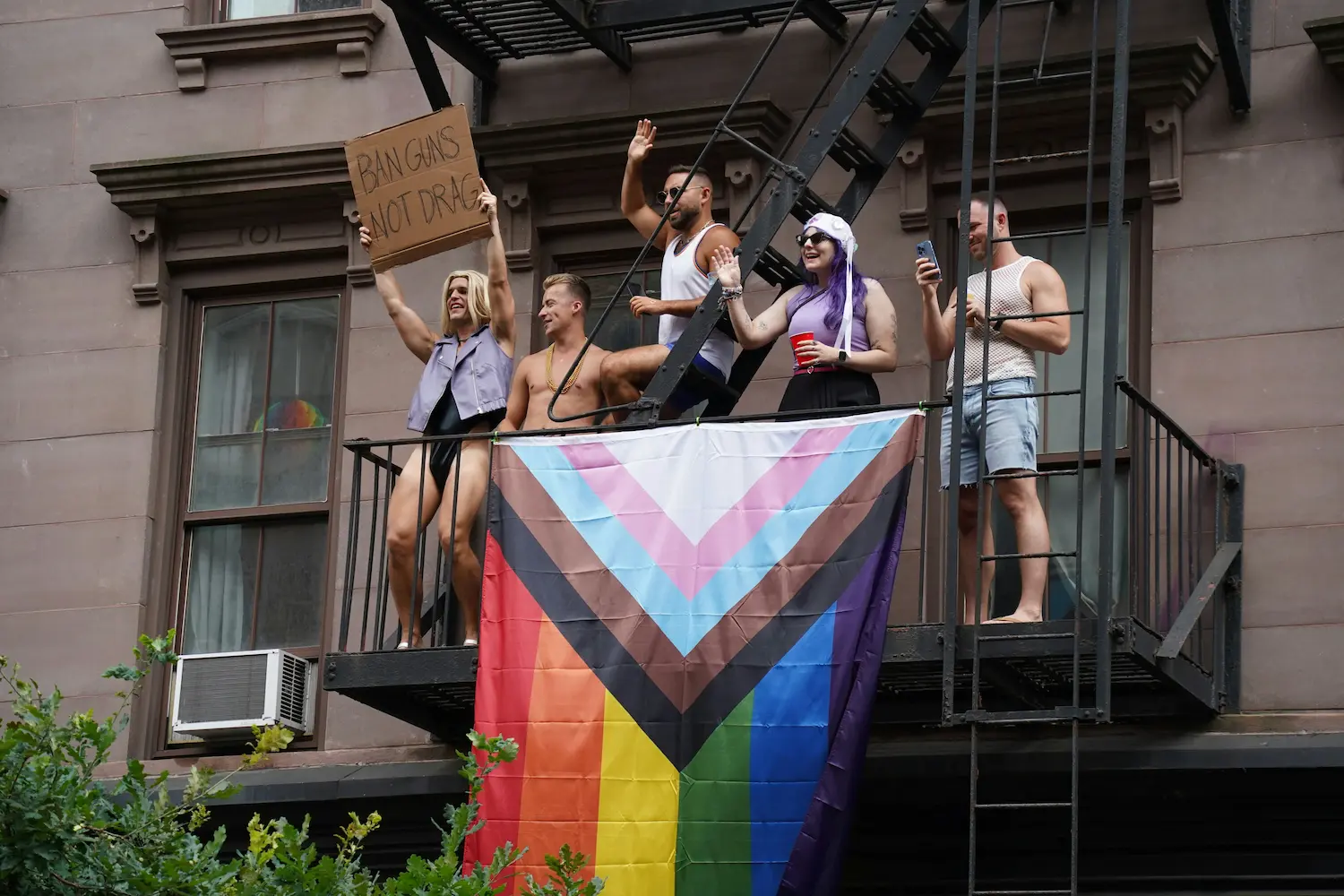
Nonetheless, these sacred gatherings transformed our understanding of queer expression. Radical acceptance became the forefront of LGBTQIA+ anthems. Fierce artistry became the fabric we wore proudly. People of color gave televised speeches, transgender people led marches, and asexual people organized events. These historic events represent the diversity and liberation that is queer joy.
What honor it has been to sit beside those who orchestrated this celebration. I always dreamt of becoming a queer-affirming therapist—but never did I expect the work to feel this monumental.
Dare I say that our clients are pioneers who forged the freedom of fluidity. Our sessions remind me of the gift I once took for granted: To live and tell our stories.
If you are personally struggling with accepting your HIV diagnosis, know that you are not alone, and Expansive Therapy can be here to help. All you have to do is reach out.
The Existential Dilemma
Infection was perceived as—and typically was—a “death sentence.” Many people quit their jobs, wrote their wills, and planned their funerals after receiving a diagnosis. Clients have shared with me the farewell letters they wrote to loved ones. Some ate and drank excessively with the lingering thought of, Nothing matters. By the late 1990s, over 700,000 people tested positive in the United States. More than half had died of AIDS. Urgency rose as people asked themselves, “What must I do?” instead of, “What shall I do?” This confrontation with death manifests into anticipatory grief. Many people relied on spirituality, substances, sexual activity, excessive spending, and other strategies to grapple with the belief that life was near end.
Several of my clients, however, refused to believe that death was inevitable. Instead, they decided how to accept their infection, the loss they have and expected to face, and the world that stood against them. Self-declared freedom allowed them to thrive in spite of absurdity. Infection also compelled them to exercise moral agency: “Do I tell others about my status?” “Do I practice safe sex?” These contemplations provoke issues of will, choice, and responsibility. They could withdraw from the world and deny medical care, or seek professional and social support. To choose between their physical and psychological existence seemed like the only option. As many were burdened with this indecision, the queer community found meaning in their shared experience. They expanded their lives as the world shrunk around them.
Community: The Spirit of Queer Activism
My understanding of the epidemic is also shaped by photographs. These pictures—with raised arms, clenched fists, and unflinching smiles—remind me of the spirit that is queer activism. Even black-and-white images capture the vibrancy of our community. “If nobody will help us, we will,” my client said when recounting the inception of Aids Coalition to Unleash Power (ACT UP), Gay Men’s Health Crisis (GMHC), Latiné/x/Caucus, and other HIV/AIDS organizations that demanded social and legislative change. They were invigorated to act in the face of uncertainty. Major cities like New York and San Francisco served as hubs of advocacy. I find myself feeling both energized and heart-broken when listening to speeches by Larry Kramer, Freddie Mercury, Princess Diana, Whoopi Goldberg, and many more. Their words exemplify the power of collective action. Their resilience is a product of human connection. For many queer activists, the word “public” implied that your voice was heard. The term also suggested that you were part of something—whether that be advocacy groups, local organizations, the Kiki scene, or personal relationships. “Colorful” also developed newfound significance, reflecting the rich and broad experience of simply speaking about HIV with others.
Nonetheless, these sacred gatherings transformed our understanding of queer expression. Radical acceptance became the forefront of LGBTQIA+ anthems. Fierce artistry became the fabric we wore proudly. People of color gave televised speeches, transgender people led marches, and asexual people organized events. These historic events represent the diversity and liberation that is queer joy.
What honor it has been to sit beside those who orchestrated this celebration. I always dreamt of becoming a queer-affirming therapist—but never did I expect the work to feel this monumental.
Dare I say that our clients are pioneers who forged the freedom of fluidity. Our sessions remind me of the gift I once took for granted: To live and tell our stories.
If you are personally struggling with accepting your HIV diagnosis, know that you are not alone, and Expansive Therapy can be here to help. All you have to do is reach out.
Want more content like this?
Join our mailing list
Want more content like this?
Join our mailing list
Want more content like this?
Join our mailing list
Book Your Intro Session With A Therapist